
Introduction
AI News has become an important topic for students, business owners, developers, marketers, content creators, and everyday internet users. Artificial intelligence is changing how people work, communicate, learn, create content, manage data, and use digital services.
From AI chatbots and image generators to smart business software and automated customer support, artificial intelligence is now being used across many industries. These tools can save time, improve productivity, and help users complete complex tasks more efficiently.
However, rapid AI development also creates concerns related to privacy, misinformation, job changes, security, and responsible technology use. Understanding major AI trends helps people use these tools safely and make better digital decisions.
Generative AI Is Changing Content Creation
Generative AI is one of the most discussed areas in artificial intelligence. It refers to technology that can create new text, images, videos, audio, presentations, and computer code based on user instructions.
Writers use AI tools to generate outlines, improve grammar, develop content ideas, and create first drafts. Designers use AI image generators to prepare illustrations, social media graphics, product concepts, and marketing visuals.
Video and audio generation tools are also becoming more capable. They can help users create voiceovers, animations, short videos, subtitles, and translated content without requiring advanced technical skills.
Although generative AI can improve creativity, its output must be reviewed carefully. AI-generated content may include incorrect facts, duplicated ideas, unnatural wording, or misleading information.
AI Chatbots Are Becoming More Useful
AI chatbots are designed to understand questions and provide human-like responses. They are increasingly used on websites, mobile applications, educational platforms, and customer service systems.
Businesses use chatbots to answer common questions, provide order updates, explain services, and guide customers through basic processes. This can reduce waiting times and allow human employees to focus on more complicated problems.
Students may use AI assistants to understand difficult topics, summarize information, practise language skills, and organize study plans. Professionals can use them for brainstorming, drafting emails, preparing reports, and reviewing documents.
However, users should not automatically trust every chatbot response. Important information should be confirmed through reliable sources, especially when it concerns health, finance, law, or personal safety.
Artificial Intelligence in Business
Companies are adopting artificial intelligence to improve productivity, reduce repetitive work, and understand customer behaviour. AI systems can analyze large amounts of data faster than traditional manual processes.
Marketing teams use AI to study audience interests, improve advertising campaigns, personalize recommendations, and prepare content ideas. Sales teams can use intelligent tools to organize leads and identify potential customers.
AI is also used in inventory management, fraud detection, financial forecasting, employee scheduling, and customer support. These applications can help businesses make quicker and more informed decisions.
Small businesses can also benefit from affordable AI tools. They may use automation for email marketing, social media scheduling, invoice management, website support, and basic data analysis.
AI Tools for Education
Artificial intelligence is changing how students learn and how teachers prepare educational content. AI-powered platforms can provide explanations, quizzes, summaries, writing feedback, and personalized learning activities.
Students can use AI to understand complicated subjects, generate revision questions, improve writing, and practise problem-solving. Language learners can receive instant feedback on grammar, pronunciation, and vocabulary.
Teachers may use artificial intelligence to prepare lesson plans, create classroom activities, organize learning materials, and identify areas where students need extra support.
AI should be used as a learning assistant rather than a replacement for independent thinking. Students should understand the information, verify facts, and complete their work honestly.
Artificial Intelligence in Healthcare
AI technology is being explored in healthcare to support medical research, patient management, and clinical decision-making. Intelligent systems can help organize medical records and identify patterns in large amounts of health data.
AI may also support medical imaging, appointment scheduling, administrative work, and remote patient monitoring. These tools can reduce repetitive tasks and allow healthcare professionals to focus more attention on patients.
Wearable devices and health applications may use AI to study general activity, sleep, heart rate, and exercise patterns. This information can help users become more aware of their daily habits.
However, AI tools should not replace qualified doctors. Medical decisions require professional judgement, accurate examination, and consideration of each patient’s individual condition.
AI and Cybersecurity
Artificial intelligence plays an important role in modern cybersecurity. Security systems can use AI to identify unusual activity, detect suspicious login attempts, and recognize possible online threats.
Companies use intelligent monitoring tools to review network traffic and respond more quickly to security problems. AI can also help filter spam messages, identify harmful files, and detect fraudulent transactions.
At the same time, cybercriminals may also use AI to create convincing fake messages, automated scams, and misleading content. This makes digital awareness more important for users and organizations.
People should use strong passwords, enable two-factor authentication, update their software, and avoid opening unknown links or attachments. AI security tools can provide support, but basic safety practices remain essential.
AI Search and Online Information
AI-powered search tools are changing how people find information online. Instead of displaying only a list of links, some systems can summarize topics and provide direct answers.
This approach may help users understand complex questions quickly. It can also make research easier by organizing information from different sources.
However, AI summaries may occasionally misunderstand a source or present outdated information. Users should still visit trusted websites and compare multiple references when accuracy matters.
Website owners are also adjusting their content strategies. Clear headings, direct answers, reliable information, and helpful explanations can make online content easier for both users and AI systems to understand.
AI Image and Video Generation
AI image and video tools allow users to create visual content by describing what they want. These tools can generate illustrations, backgrounds, advertisements, thumbnails, product concepts, and social media images.
Businesses can use AI visuals to test creative ideas before investing in full production. Content creators can prepare attractive graphics without needing advanced design experience.
AI video platforms can assist with scripts, captions, voiceovers, scene generation, and basic editing. This may make video creation faster and more accessible.
Users should still respect copyright, privacy, and platform rules. AI-generated images should not be used to impersonate people, spread false information, or mislead audiences.
AI Coding Assistants
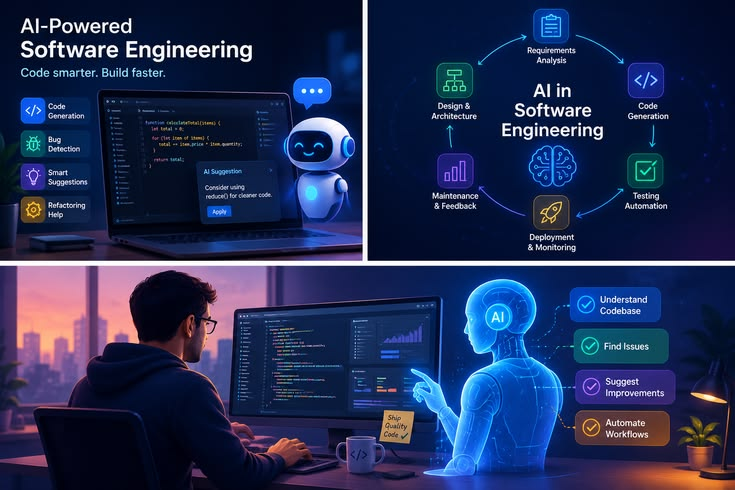
AI coding tools can help developers write, explain, review, and improve computer code. They may suggest functions, identify possible errors, and provide examples for common programming tasks.
Beginners can use coding assistants to understand technical concepts and learn how different programming languages work. Experienced developers may use them to reduce repetitive work and speed up software development.
However, AI-generated code should always be tested. It may contain security weaknesses, outdated methods, or mistakes that are difficult to notice.
Developers should review every suggestion, protect confidential information, and follow proper security standards before using AI-generated code in a real application.
AI and Employment
Artificial intelligence is changing the responsibilities required in many jobs. Some routine tasks may become automated, while new roles related to AI management, data analysis, cybersecurity, and digital strategy may emerge.
Employees can prepare for these changes by improving their technical and creative skills. Learning how to use AI tools responsibly may become valuable in marketing, education, finance, administration, design, and customer service.
Human abilities such as communication, leadership, judgement, empathy, and problem-solving remain important. AI can assist workers, but it cannot fully replace human understanding in every situation.
Businesses should provide training and help employees adapt to changing technology rather than introducing automation without proper planning.
Privacy and Responsible AI Use
Privacy is one of the biggest concerns connected to artificial intelligence. Many AI systems require information to generate responses or improve services.
Users should avoid entering passwords, banking details, confidential business information, or private personal data into public AI platforms. They should also review privacy policies before using unfamiliar tools.
Responsible AI development includes transparency, fairness, security, and accountability. Companies should explain how their systems collect data and how automated decisions are made.
Governments, technology companies, researchers, and users all have a role in encouraging safe and ethical AI use.
The Future of Artificial Intelligence
Artificial intelligence is expected to become more integrated into smartphones, search engines, vehicles, workplaces, healthcare systems, and household devices.
Future AI tools may provide more personalized assistance and better understand text, images, audio, and video together. This could make digital interactions faster and more natural.
Businesses may use AI to improve forecasting, customer experiences, manufacturing, logistics, and product development. Schools may introduce more personalized digital learning systems.
Despite these opportunities, human supervision will remain necessary. Strong safety standards, accurate information, privacy protection, and responsible decision-making will determine how successfully AI benefits society.
Conclusion
AI News highlights how artificial intelligence is reshaping content creation, business, education, healthcare, cybersecurity, search, software development, and the modern workplace. AI tools can save time, support creativity, and help users manage information more effectively.
At the same time, artificial intelligence must be used carefully. Users should verify important information, protect personal data, review generated content, and avoid relying completely on automated systems.
As AI technology continues to develop, learning how it works will become increasingly valuable. People and businesses that use artificial intelligence responsibly will be better prepared to benefit from future digital opportunities.